Why Regions Matter When You Travel
Italian level: A2–B1 | Read in Italian and English
INTRO
Italy is not one single experience. In this article, you’ll read a simple Italian text about regional differences in Italy, followed by an English version and useful vocabulary.

L’Italia non è una sola
Quando pensiamo all’Italia, spesso immaginiamo alcune cose famose: la pasta, il caffè, l’arte, le piazze, le città storiche, il mare e il buon cibo.
Queste immagini sono vere, ma non raccontano tutta la realtà.
L’Italia non è un Paese uniforme. È un Paese piccolo, ma molto vario. Da nord a sud cambiano i paesaggi, il clima, il cibo, le abitudini, gli accenti e anche il ritmo della vita quotidiana.
Per questo motivo, quando viaggi in Italia, non visiti semplicemente “l’Italia”. Visiti regioni, città, paesi e territori con identità diverse.
Le regioni sono importanti
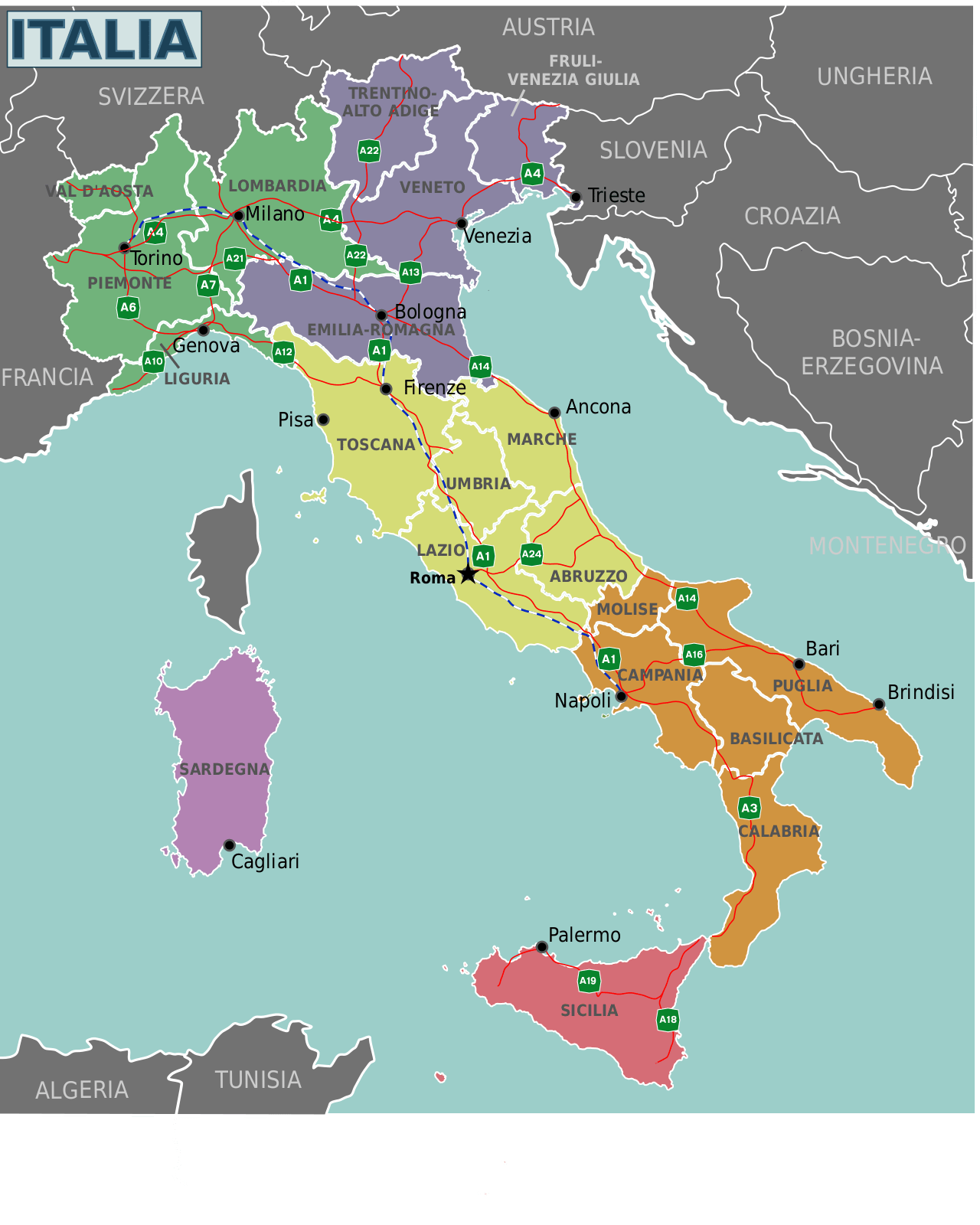
L’Italia è divisa in venti regioni. Ogni regione ha una storia, una geografia e una cultura particolare.
Per esempio, la Lombardia, nel nord, ha grandi città, zone industriali, laghi e montagne. La Toscana, nel centro, è famosa per le città d’arte, le colline, i borghi e i paesaggi rurali. La Campania, nel sud, ha una forte identità mediterranea, una grande tradizione gastronomica, siti archeologici importanti e città molto vive come Napoli.
Naturalmente queste sono solo immagini generali. Ogni regione è più complessa di così. Però è utile capire una cosa: in Italia l’identità locale è molto forte.
Molti italiani si sentono italiani, ma si sentono anche profondamente legati alla loro regione, alla loro città o al loro paese.
Anche il cibo cambia
Uno degli esempi più chiari è il cibo.
All’estero si parla spesso di “cucina italiana”, ma in Italia la cucina è soprattutto regionale. Molti piatti tipici appartengono a una zona precisa.
In Emilia-Romagna troviamo tortellini, tagliatelle al ragù, Parmigiano Reggiano e aceto balsamico. In Campania troviamo la pizza napoletana, la mozzarella di bufala, i pomodori e molti piatti di mare. In Sicilia troviamo arancini, caponata, cannoli e piatti con influenze mediterranee diverse.
Anche le parole possono cambiare. In alcune zone si dice “cornetto”, in altre “brioche”. A volte le parole indicano quasi la stessa cosa, ma l’uso cambia da regione a regione.
Per un viaggiatore, questa varietà è molto interessante. Invece di chiedere solo “Che cosa si mangia in Italia?”, è meglio chiedere: Che cosa si mangia qui? Qual è il piatto tipico di questa zona? Queste domande cambiano il modo di viaggiare.
Cambiano anche i paesaggi e il ritmo
L’Italia ha montagne, pianure, colline, coste, isole, grandi città e piccoli borghi. Per questo il viaggio cambia molto a seconda del luogo.
Milano può sembrare veloce, moderna e internazionale. Un piccolo paese in Umbria può sembrare più tranquillo e silenzioso. Una città di mare in Puglia, in estate, può essere piena di vita, rumori e persone. Un borgo di montagna può avere un ritmo più lento e legato alle stagioni.
Non c’è un’Italia migliore e un’Italia peggiore. Ci sono Italie diverse.
Questo è importante anche quando organizzi un viaggio. Alcuni luoghi sono facili da raggiungere in treno. Altri richiedono più tempo, più pazienza o una macchina. Alcune città sono perfette per due o tre giorni. Altre zone sono più belle se viaggi lentamente.
Uno degli errori più comuni è voler vedere troppo in poco tempo. Ma l’Italia spesso si capisce meglio quando si rallenta.
Perché è utile anche per imparare l’italiano
Se studi l’italiano, questa varietà è importante.
L’italiano standard è la lingua che studi nei libri, nei corsi e nelle lezioni. È fondamentale, perché ti permette di comunicare in tutto il Paese.
Però nella vita reale puoi sentire accenti diversi, parole locali, modi di dire regionali e ritmi diversi nel parlato.
L’italiano che senti a Venezia può essere diverso dall’italiano che senti a Napoli. L’italiano che senti a Firenze può essere diverso da quello che senti a Palermo.
Questo non deve spaventarti. Non devi capire tutti i dialetti o tutte le varianti locali. È impossibile, anche per molti italiani.
Ma sapere che queste differenze esistono ti aiuta. Ti permette di ascoltare con più attenzione e di capire che la lingua non vive solo nei libri. Vive nei luoghi, nelle persone e nelle situazioni reali.
Un modo migliore di viaggiare
Invece di chiederti solo: “quali sono i posti più famosi in Italia?”, puoi chiederti:
Che tipo di Italia voglio conoscere?
Voglio città grandi o piccoli borghi?
Voglio mare, montagna, arte, cucina, storia o vita quotidiana?
Che cosa è tipico di questa regione?
Queste domande rendono il viaggio più ricco.
L’Italia non è solo una cartolina. È un insieme di luoghi, storie, accenti, cibi e abitudini. Più osservi le differenze, più il viaggio diventa interessante. E forse questa è una delle cose più belle dell’Italia: non finisce mai in una sola immagine.

Italy Is Not Just One Italy
When we think about Italy, we often imagine some famous things: pasta, coffee, art, squares, historic cities, the sea and good food.
These images are true, but they do not tell the whole story.
Italy is not a uniform country. It is a small country, but it is very varied. From north to south, landscapes, climate, food, habits, accents and even the rhythm of daily life can change.
For this reason, when you travel in Italy, you do not simply visit “Italy”. You visit regions, cities, towns and territories with different identities.
Regions matter
Italy is divided into twenty regions. Each region has its own history, geography and culture.
For example, Lombardy, in the north, has large cities, industrial areas, lakes and mountains. Tuscany, in central Italy, is famous for its art cities, hills, small towns and rural landscapes. Campania, in the south, has a strong Mediterranean identity, an important food tradition, major archaeological sites and very lively cities such as Naples.
Of course, these are only general images. Every region is more complex than this. But one thing is useful to understand: in Italy, local identity is very strong.
Many Italians feel Italian, but they also feel deeply connected to their region, their city or their town.
Food changes too
One of the clearest examples is food.
Abroad, people often talk about “Italian food”, but in Italy food is above all regional. Many typical dishes belong to a specific area.
In Emilia-Romagna, you find tortellini, tagliatelle with ragù, Parmigiano Reggiano and balsamic vinegar. In Campania, you find Neapolitan pizza, buffalo mozzarella, tomatoes and many seafood dishes. In Sicily, you find arancini, caponata, cannoli and dishes with different Mediterranean influences.
Even words can change. In some areas people say “cornetto”, while in others they say “brioche”. Sometimes the words refer to almost the same thing, but the use changes from region to region.
For a traveller, this variety is very interesting. Instead of asking only “What do people eat in Italy?”, it is better to ask: What do people eat here? What is the typical dish of this area? This question changes the way you travel.
Landscapes and rhythm change too
Italy has mountains, plains, hills, coasts, islands, large cities and small towns. For this reason, the travel experience changes a lot depending on the place.
Milan can feel fast, modern and international. A small town in Umbria can feel quieter and more peaceful. A seaside town in Puglia in summer can be full of life, noise and people. A mountain village can have a slower rhythm, connected to the seasons.
There is no better Italy and worse Italy. There are different Italies.
This is important when you plan a trip. Some places are easy to reach by train. Others require more time, more patience or a car. Some cities are perfect for two or three days. Other areas are more beautiful if you travel slowly.
One of the most common mistakes is trying to see too much in too little time. But Italy is often easier to understand when you slow down.
Why this is useful if you are learning Italian
If you are studying Italian, this variety is important.
Standard Italian is the language you study in books, courses and lessons. It is essential, because it allows you to communicate across the whole country.
But in real life, you can hear different accents, local words, regional expressions and different rhythms of speech.
The Italian you hear in Venice may be different from the Italian you hear in Naples. The Italian you hear in Florence may be different from the Italian you hear in Palermo.
This should not scare you. You do not need to understand every dialect or every local variation. That is impossible, even for many Italians.
But knowing that these differences exist helps you. It allows you to listen with more attention and to understand that language does not live only in books. It lives in places, people and real situations.
A better way to travel
To travel better in Italy, you do not need to know everything before you leave. But you can ask better questions. Instead of asking only: What are the most famous places in Italy? you can ask:
What kind of Italy do I want to discover?
Do I want big cities or small towns?
Do I want the sea, mountains, art, food, history or daily life?
What is typical of this region?
These questions make the journey richer.
Italy is not just a postcard. It is a combination of places, stories, accents, foods and habits. The more you observe the differences, the more interesting your trip becomes. And perhaps this is one of the most beautiful things about Italy: it never fits into just one image.
Useful Italian from the text
un Paese uniforme = a uniform country
da nord a sud = from north to south
le abitudini = habits
il ritmo della vita quotidiana = the rhythm of daily life
essere legato a = to be connected to
un piatto tipico = a typical dish
raggiungere un luogo = to reach a place
rallentare = to slow down
ascoltare con attenzione = to listen carefully
vita quotidiana = daily life
Want to learn Italian through real situations?
I help adult learners improve their Italian with a structured, realistic method based on conversation, grammar in context, useful vocabulary and cultural understanding.
If you want to speak Italian with more confidence and understand Italy beyond the usual clichés, you can book a free trial lesson with me.
Image credit: “Italy regions.svg” by User: (WT-shared) Sertmann at wts Wikivoyage, via Wikimedia Commons, licensed under CC BY-SA 4.0. No changes made.
 Riccardo Fausti - Italian Language Coach
